Football technique explained
Ozil Bounce Explained: The Chop Shot vs a Chip
The Ozil bounce is a football finish that sends the ball into the turf so its rebound carries it upward past the goalkeeper. It is also called the Ozil chop or bounce shot. The key clue is the ground contact after the strike: a conventional chip lifts directly into the air instead.
- By the Ozil AI editorial team
- Updated October 25, 2026
- 5 min read
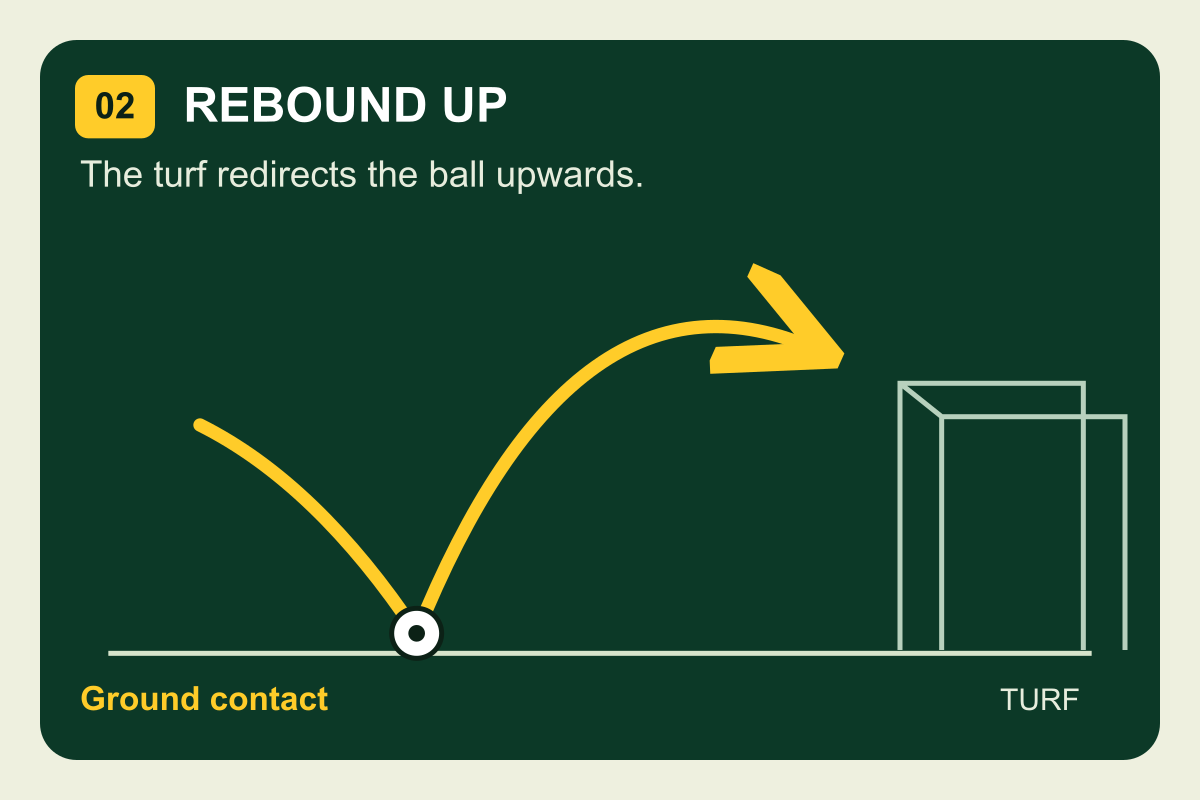
The diagrams below explain the ball path. They are illustrations, not match frames or a promise of how an AI clip will move.
What is the Ozil bounce, and how does it work?
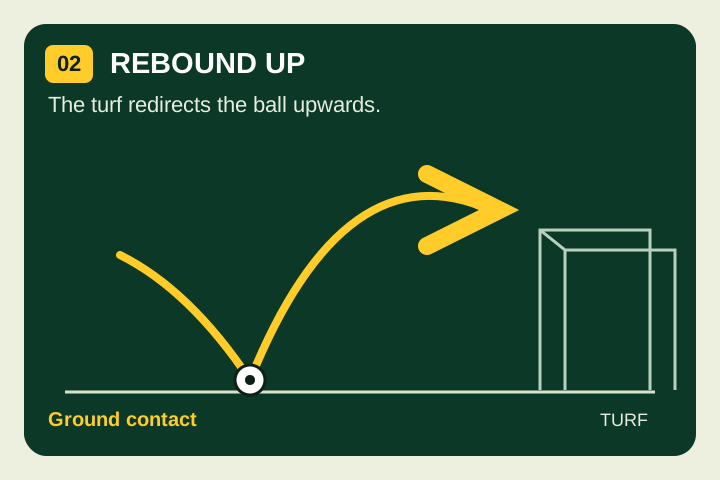
In the bounce finish, the attacking player strikes down on the ball so it hits the surface and rises on the rebound. The upward part of the path comes after that contact with the turf. Against a goalkeeper who has already lowered their body or committed to a challenge, that change in height can take the ball beyond the attempted save.
The name is associated with Mesut Özil’s finishing, but it is more useful to understand the action than to memorize the label. “Chop shot” describes the downward strike; “bounce shot” describes what the ball does next. Both names can refer to the same ground-first finish. A ball that merely bounces while the player dribbles is not enough to identify it.
Arsenal’s own technique video uses both names and shows Özil demonstrating the move. Watch the contact and rebound rather than only the celebration. Slow motion can help you follow the order, although a particular replay angle may still hide the moment when the ball touches the pitch. If the contact is unclear, avoid treating one blurred frame as proof.
Ozil bounce vs chip: compare the ball path
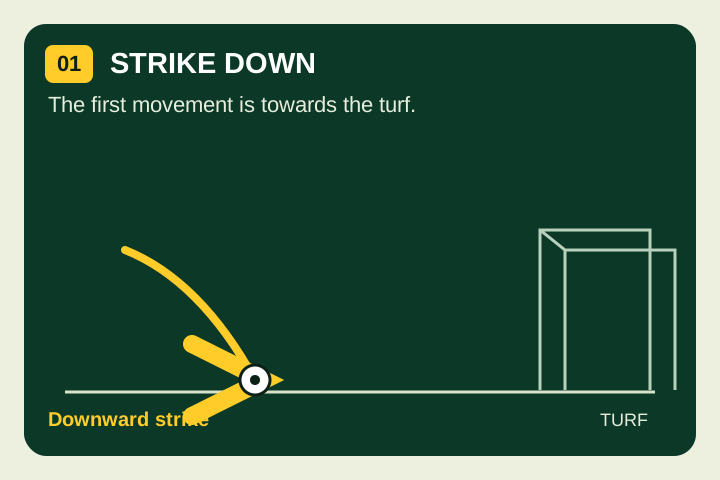
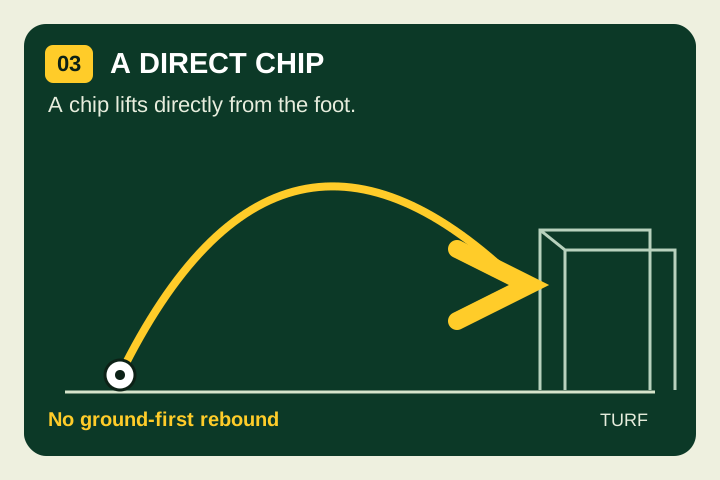
A chip sends the ball upward from the foot and over an obstacle in an arc. The bounce shot first sends it down, then uses the pitch to redirect it upward. Both can lift the ball beyond a goalkeeper, so the final airborne part alone can look similar. The first movement after the shooting touch is the difference to look for.
Neither finish is automatically the right choice in every one-on-one. The keeper’s position, distance to goal, ball control and playing surface affect the opportunity. A bounce also depends on the rebound from the turf, whereas a chip relies on the flight created at the first touch. There is no fixed rebound height or speed that every attempt will reproduce.
For a replay comparison, follow the same ball from the striker’s foot to the goalkeeper. Do not compare a close-up of one strike with a distant angle of another and infer the technique from the apparent height alone. A continuous view that includes the foot, nearby turf and keeper gives you the most useful evidence.
Three checks for spotting the finish in a replay
Pause just before the final shot and follow the ball forward a few frames at a time. The aim is to establish the order of contact, rebound and attempted save. If an edit cuts away at the strike, find a fuller replay before deciding which technique it shows. A social caption can suggest a name, but it cannot replace the visible action.
- Check the strike: does the ball move down toward the turf immediately after the foot makes contact, or does it lift straight into an arc?
- Check the rebound: can you see a separate ground contact followed by a rise? A shadow, motion blur or a bounce from an earlier dribble can be misleading.
- Check the keeper: where is the ball when the goalkeeper commits? Keep the full path in view rather than identifying the move from the ball’s position inside the net.
What to focus on if you practise the chop shot
Start by trying to understand the rebound, rather than copying the pace of a professional match. With space, a ball and no opponent in the way, observe how a controlled downward strike changes the next part of the ball path. A soft or uneven surface can behave differently from the pitch in a highlight video.
Keep the ball within a comfortable reach and build control before adding speed or a goalkeeper. Filming from the side can make the foot-to-turf-to-rise sequence easier to inspect than filming from behind the goal. If your strike lifts directly into the air, you are seeing a chip-like path rather than the ground-first action you intended.
This explanation is a way to read and discuss the technique, rather than a claim that one sentence or a particular foot angle guarantees the result. For practical coaching, work with someone who can observe your touch and the surface you are using. The useful takeaway from the replay is the order of events, not a supposedly universal measurement.
Why the Ozil bounce and the AI goal trend get mixed up
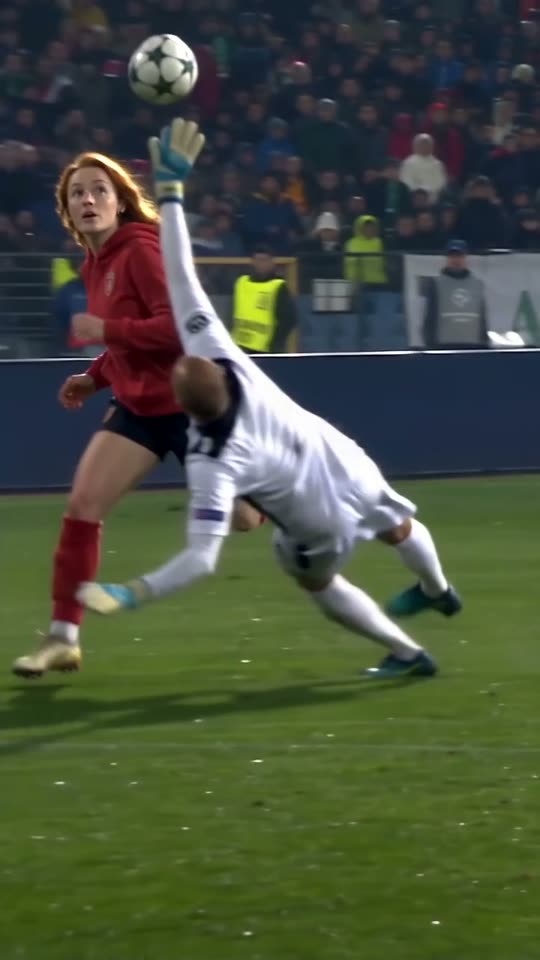
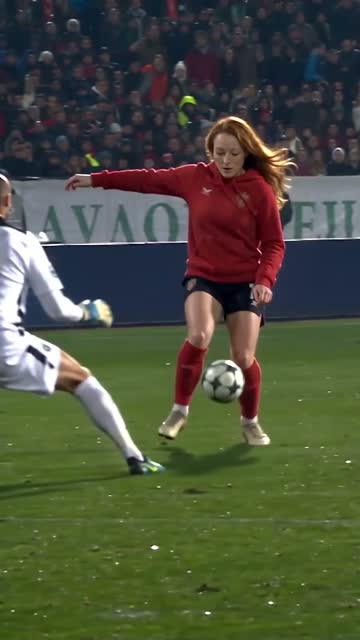
The AI goal trend usually recreates the longer attacking sequence associated with Özil’s 2016 winner at Ludogorets: a keeper encounter, recovering defenders and a controlled finish. That scene is different from a tutorial about a ground-first bounce shot. Searching the player’s name plus “goal” can bring both topics into the same results.
If you want an AI recreation of the famous full move, describe the whole sequence or choose the Ozil goal template. If you want a bounce-shot demonstration in a tool with custom prompts, describe the downward strike, visible turf contact and upward rebound explicitly. Combining both requests can produce a confused ball path or skip the finish.
The studio on this site offers the selected goal recreation, rather than a dedicated bounce-technique control. Review its preview before generating. Use the trend explainer to identify the real-match reference, or the prompt guide to plan a separate custom scene. Label generated examples clearly so they are not mistaken for evidence of a real match technique.
Frequently asked questions
Q1Is the Ozil bounce the same as a chip?
No. The bounce shot is directed into the turf and rises after ground contact. A chip lifts directly from the foot into an arc. Both can go over a goalkeeper, so watch the first part of the ball path to tell them apart.
Q2Why is it also called the Ozil chop?
“Chop” describes the downward striking action and “bounce” describes the rebound. Arsenal’s demonstration uses both names. In discussion of this finish, they describe the same ground-first idea rather than two separate tricks.
Q3Does any bouncing shot count as an Ozil bounce?
No. A low shot may bounce later on its way to goal, and a dribbled ball may bounce before the strike. Look for the deliberate strike into the nearby turf followed by the upward rebound that takes the ball past the goalkeeper.
Q4Is the Ludogorets goal a bounce-shot tutorial?
No. The goal is the reference for a longer attacking recreation, and the AI trend focuses on the whole move. It should not be used as a substitute for a technique demonstration that clearly shows the ground-first shot.
Q5Can I select an Ozil bounce mode in this studio?
There is no separate bounce-technique setting in the current studio. The Ozil template recreates the goal sequence shown in its preview. For a custom bounce demonstration, use a tool with appropriate scene controls and check that the ground contact is actually visible.
NO. 10 / YOU
Your turn on the ball
Bring one photo. Take home your own football moment.
Open the studio